APP anticorps (AA 666-670)
 (1 validation)
Aperçu rapide pour APP anticorps (AA 666-670) (ABIN197432)
Antigène
Voir toutes APP AnticorpsReactivité
Hôte
Clonalité
Conjugué
Application
-
-
Épitope
- AA 666-670
-
Specificité
- This antibody detects endogenous levels of total APP protein.
-
Purification
- Affinity Chromatography using epitope-specific immunogen.
-
Immunogène
- peptide Sequence around amino acids 666~670 (A-V-T-P-E) derived from Human APP protein.
-
-
anti-Amyloid beta (A4) Precursor Protein (APP) (C-Term) antibody
APP Reactivité: Humain WB, IF, ICC, IHC (p), IHC (fro) Hôte: Lapin Polyclonal unconjugated
anti-Amyloid beta (A4) Precursor Protein (APP) antibodyAPP Reactivité: Humain, Souris WB, IHC, ELISA, IF, FM Hôte: Lapin Polyclonal unconjugated
anti-Amyloid beta (A4) Precursor Protein (APP) (AA 18-270) antibodyAPP Reactivité: Humain WB, IHC, ELISA, IF Hôte: Lapin Polyclonal unconjugated
anti-Amyloid beta (A4) Precursor Protein (APP) antibodyKD Validated APP Reactivité: Humain WB, ICC, FACS Hôte: Lapin Monoclonal 23GB1535 unconjugated Recombinant Antibody
anti-Amyloid beta (A4) Precursor Protein (APP) (AA 381-480) antibodyAPP Reactivité: Humain WB, IHC (p), IF (cc), IF (p), IHC (fro) Hôte: Lapin Polyclonal unconjugated
anti-Amyloid beta (A4) Precursor Protein (APP) antibodyAPP Reactivité: Humain WB, IHC, ELISA, IF, IP Hôte: Lapin Polyclonal unconjugated
anti-Amyloid beta (A4) Precursor Protein (APP) (C-Term) antibodyAPP Reactivité: Humain, Souris, Rat WB, IF, ICC, IHC (p) Hôte: Lapin Polyclonal unconjugated
anti-Amyloid beta (A4) Precursor Protein (APP) (AA 18-286) antibodyAPP Reactivité: Souris WB, IHC, ICC, IP Hôte: Lapin Polyclonal unconjugated
anti-Amyloid beta (A4) Precursor Protein (APP) (AA 483-699) antibodyAPP Reactivité: Humain ELISA, FACS Hôte: Souris Monoclonal 5H10A10 unconjugated
anti-Amyloid beta (A4) Precursor Protein (APP) antibodyAPP Reactivité: Humain WB, IHC, ELISA, IF Hôte: Souris Monoclonal 5A11E5 unconjugated
-
-
Indications d'application
-
Western Blot: 1/500-1/1000. Immunofluorescence: 1/100-1/200.
Other applications not tested.
Optimal dilutions are dependent on conditions and should be determined by the user. -
Restrictions
- For Research Use only
-
-
- by
- Molecular Pathology Core
- No.
- #029576
- Date
- 11.01.2014
- Antigène
- Numéro du lot
- 8715
- Application validée
- Immunofluorescence
- Contrôle positif
- Human brain
- Contrôle négative
- Human liver
- Conclusion
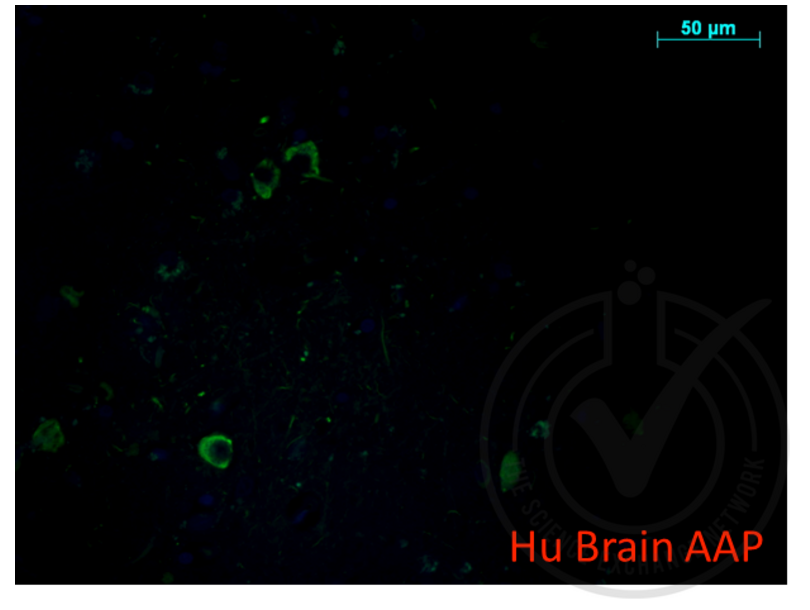
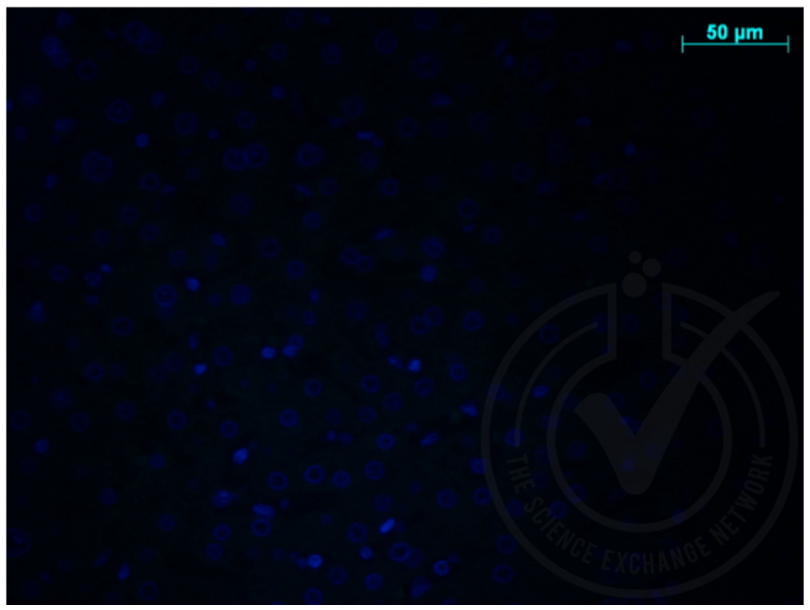
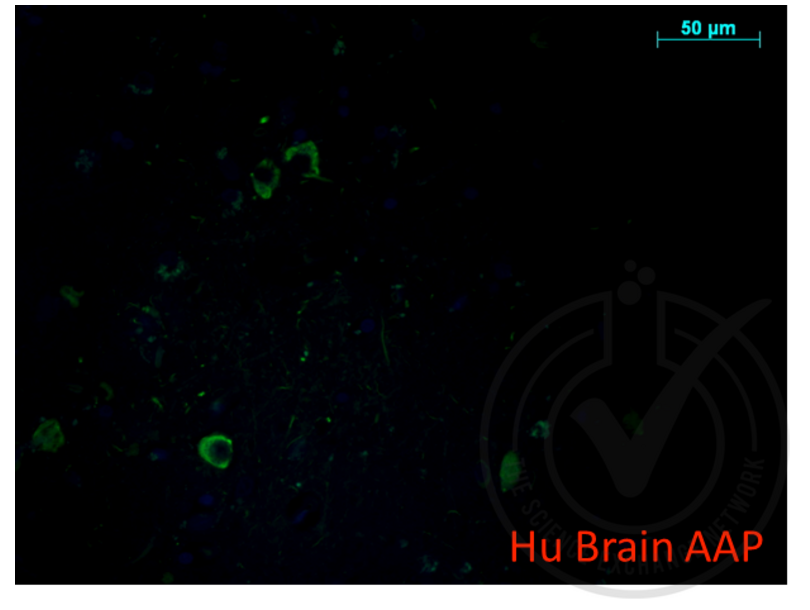
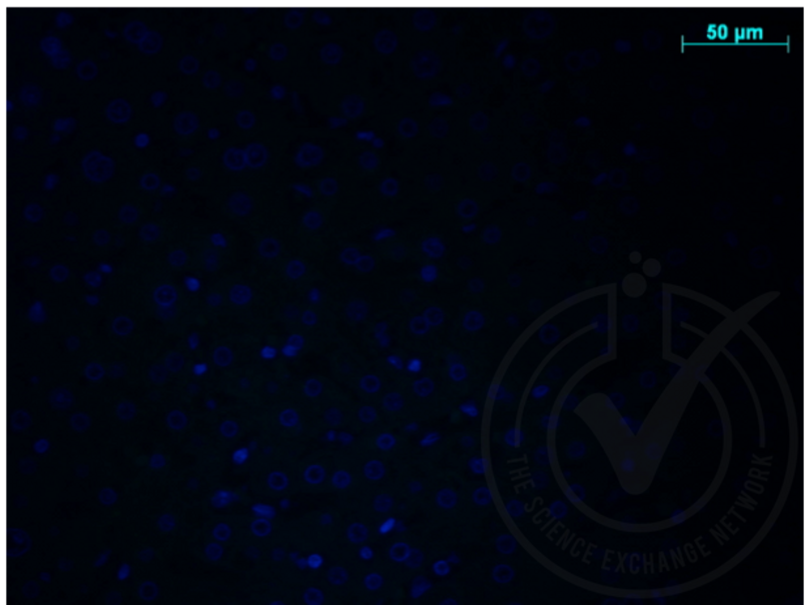
- Signal was detected in positive control tissue, and no signal was seen in negative control tissue.
- Anticorps primaire
- Antibody: Amyloid beta A4 precursor protein (APP)
- Catalog number: ABIN197433
- Lot number: 8715
- Anticorps secondaire
- Antibody: AlexaFluor 488 goat anti-Rabbit IgG
- Lot number: 702323
- Full Protocol
- Sections were deparaffinized and rehydrated.
- Sections were heated to 98°C for 20 min in citrate buffer pH 6.0 (Biogenex, HK086-9K) for antigen retrieval and cooled down for 20 min on the bench.
- Sections were blocked in 10% NGS (normal goat serum) for 20 min at room temperature.
- Sections were washed x 2 in 1xTBS buffer.
- Sections were incubated with primary antibody diluted 1:100 in Antibody Diluent (Invitrogen, 003218) at 4°C overnight.
- Sections were washed x 2 in 1xTBS buffer.
- Sections were incubated with AlexaFluor 488 Goat anti-Rabbit IgG 1:1000 for 60 min.
- Sections were washed x 3 in 1xTBS buffer.
- Sections were mounted with DAPI (Invitrogen, Prolong Gold antifade reagent with DAPI) and coverslipped.
- Sections were photographed with a Zeiss Axioskop2 microscope
- Notes
- None
Validation #029576 (Immunofluorescence)
 Validation Images
![Figure 1. Micrograph image of positive control (human brain FFPE tissue). APP staining appears in green.]() Figure 1. Micrograph image of positive control (human brain FFPE tissue). APP staining appears in green.
Figure 1. Micrograph image of positive control (human brain FFPE tissue). APP staining appears in green.
![Figure 2: micrograph image of negative control (human liver FFPE tissue) stained with APP antibody.]() Figure 2: micrograph image of negative control (human liver FFPE tissue) stained with APP antibody.
Figure 2: micrograph image of negative control (human liver FFPE tissue) stained with APP antibody.
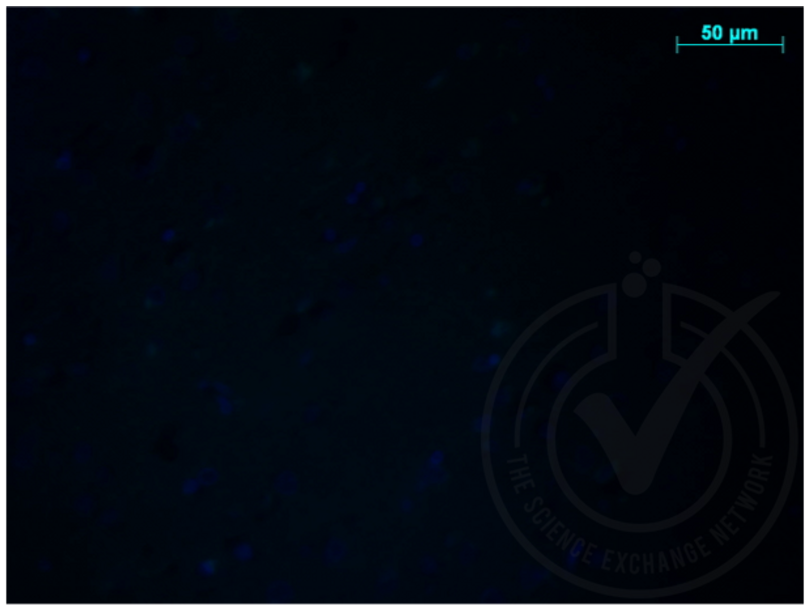
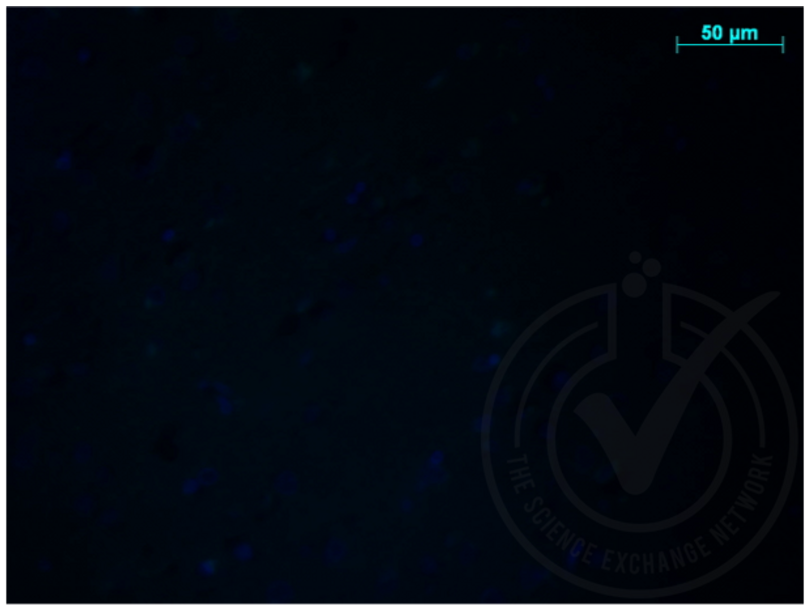
![Figure 3: micrograph image of isotype control (rabbit IgG isotype control antibody on human brain FFPE tissue).]() Figure 3: micrograph image of isotype control (rabbit IgG isotype control antibody on human brain FFPE tissue).
Figure 3: micrograph image of isotype control (rabbit IgG isotype control antibody on human brain FFPE tissue).
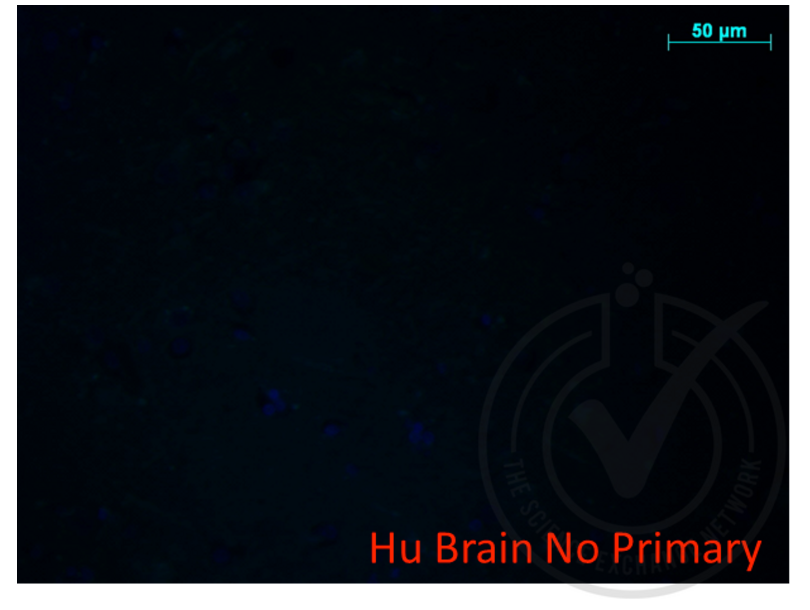
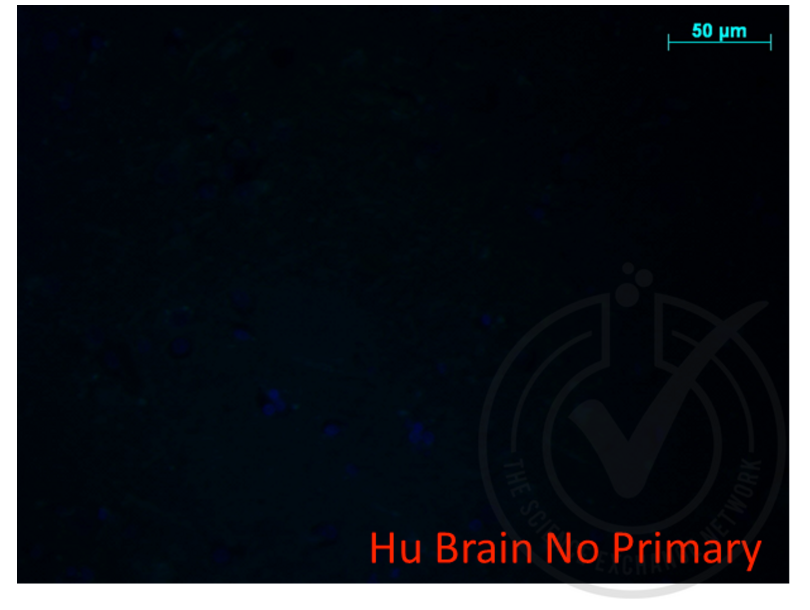
![Figure 4: micrograph image of secondary antibody only control (no primary antibody on human brain FFPE tissue).]() Figure 4: micrograph image of secondary antibody only control (no primary antibody on human brain FFPE tissue).
Protocole
Figure 4: micrograph image of secondary antibody only control (no primary antibody on human brain FFPE tissue).
Protocole -
-
Concentration
- 1.0 mg/mL
-
Buffer
- PBS (without Mg2+ and Ca2+), pH 7.4 containing 150 mM NaCl, 0.02 % Sodium Azide and 50 % Glycerol.
-
Agent conservateur
- Sodium azide
-
Précaution d'utilisation
- This product contains sodium azide: a POISONOUS AND HAZARDOUS SUBSTANCE which should be handled by trained staff only.
-
Conseil sur la manipulation
- Avoid repeated freezing and thawing.
-
Stock
- -20 °C
-
Stockage commentaire
- Store the antibody (in aliquots) at -20 °C.
-
-
- APP (Amyloid beta (A4) Precursor Protein (APP))
-
Autre désignation
- Amyloid beta A4 Protein / APP
-
Sujet
- Amyloid beta precursor protein gene (ABPP) encodes a cell surface receptor and transmembrane precursor protein that is cleaved by secretases to form a number of peptides. Multiple transcript variants encoding several different isoforms have been found for this gene. Isoform APP695 is the predominant form in neuronal tissue, isoform APP751 and isoform APP770 are widely expressed in nonneuronal cells. Isoform APP751 is the most abundant form in T lymphocytes. ABPP is expressed in all fetal tissues examined with the highest levels in brain, kidney, heart and spleen with weak expression observed in liver, ABPP is induced during neuronal differentiation. In the adult brain, highest expression of ABPP gene is found in the frontal lobe of the cortex and in the anterior perisylvian cortex opercular gyri, moderate expression in the cerebellar cortex, the posterior perisylvian cortex opercular gyri and the temporal associated cortex. Weak expression is found in the striate, extra striate and motor cortices. Mutations in ABPP have been implicated in autosomal dominant Alzheimer disease and cerebroarterial amyloidosis (cerebral amyloid angiopathy).Synonyms: ABPP, APPI, Alzheimer disease amyloid protein, Amyloid Precursor Protein, CVAP, Cerebral vascular amyloid peptide, PreA4, Protease nexin-II
-
ID gène
- 351
-
NCBI Accession
- NP_000475
-
UniProt
- P05067
-
Pathways
- Caspase Cascade in Apoptosis, EGFR Signaling Pathway, Transition Metal Ion Homeostasis, Skeletal Muscle Fiber Development, Toll-Like Receptors Cascades, Feeding Behaviour
Antigène
-