MAP2K5 anticorps (AA 251-350)
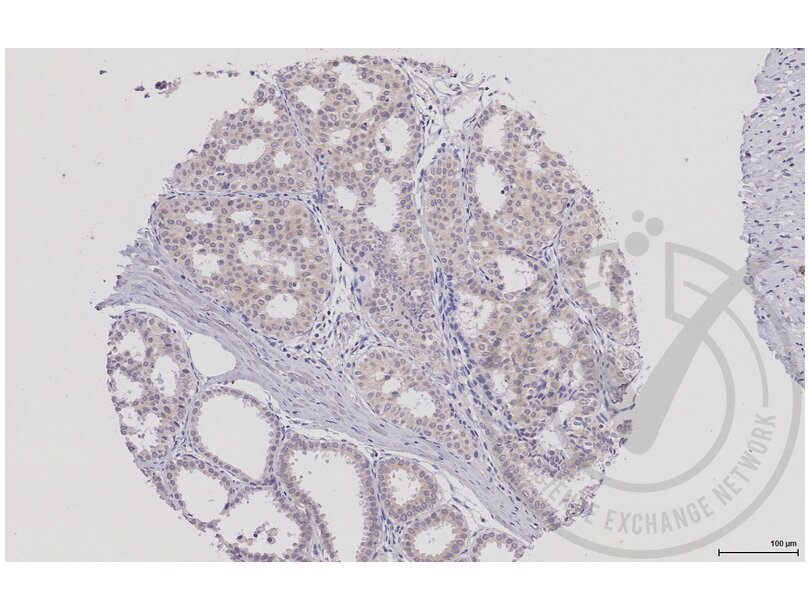
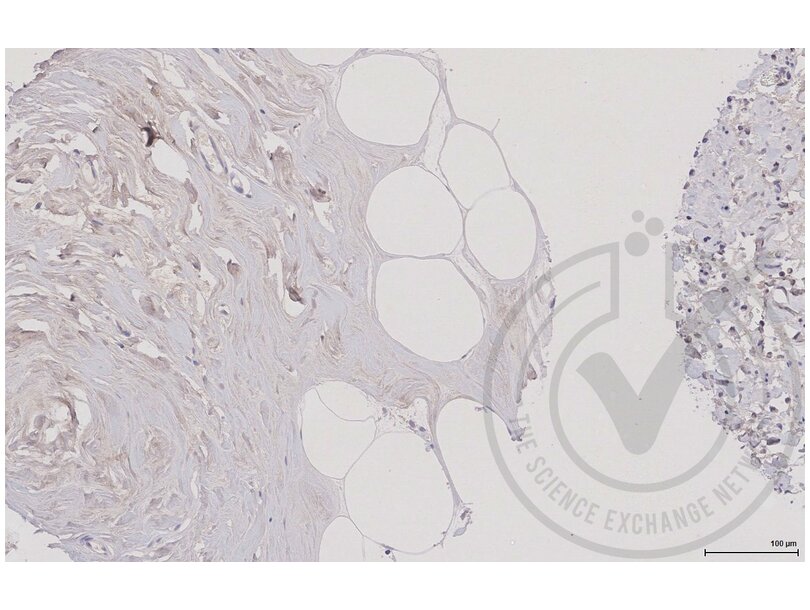
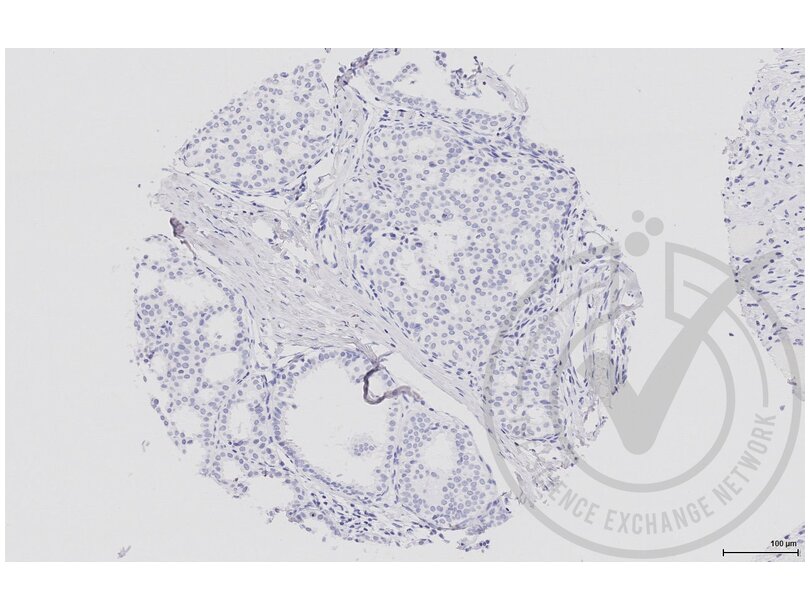
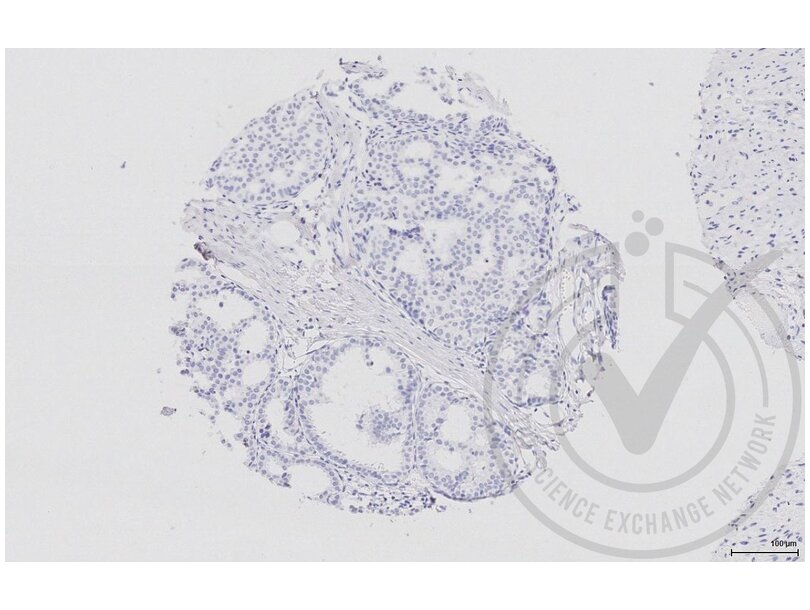
 (2 références)
 (1 validation)
Aperçu rapide pour MAP2K5 anticorps (AA 251-350) (ABIN754183)
Antigène
Voir toutes MAP2K5 AnticorpsReactivité
Hôte
Clonalité
Conjugué
Application
-
-
Épitope
- AA 251-350
-
Réactivité croisée
- Humain, Souris, Rat
-
Homologie
- Dog,Cow,Pig,Horse,Chicken,Rabbit
-
Purification
- Purified by Protein A.
-
Immunogène
- KLH conjugated synthetic peptide derived from human MEK5
-
Isotype
- IgG
-
-
anti-Mitogen-Activated Protein Kinase Kinase 5 (MAP2K5) (AA 1-448) antibody
MAP2K5 Reactivité: Humain WB, ELISA, IF Hôte: Souris Monoclonal M1-E6 unconjugated
anti-Mitogen-Activated Protein Kinase Kinase 5 (MAP2K5) (AA 1-120) antibodyMAP2K5 Reactivité: Humain WB, ELISA, IF Hôte: Souris Monoclonal 1B4 unconjugated
anti-Mitogen-Activated Protein Kinase Kinase 5 (MAP2K5) (AA 1-190) antibodyMAP2K5 Reactivité: Humain WB, ELISA, IHC Hôte: Lapin Polyclonal unconjugated
anti-Mitogen-Activated Protein Kinase Kinase 5 (MAP2K5) (AA 1-120) antibodyMAP2K5 Reactivité: Humain WB, ELISA, IF, PLA Hôte: Souris Monoclonal 1E5 unconjugated
anti-Mitogen-Activated Protein Kinase Kinase 5 (MAP2K5) (AA 1-190) antibodyMAP2K5 Reactivité: Humain WB, ELISA, IF Hôte: Lapin Polyclonal unconjugated
anti-Mitogen-Activated Protein Kinase Kinase 5 (MAP2K5) (AA 1-190) antibodyMAP2K5 Reactivité: Humain ELISA, IHC Hôte: Lapin Polyclonal unconjugated
anti-Mitogen-Activated Protein Kinase Kinase 5 (MAP2K5) antibodyMAP2K5 Reactivité: Humain WB Hôte: Lapin Monoclonal unconjugated
anti-Mitogen-Activated Protein Kinase Kinase 5 (MAP2K5) (AA 127-156) antibodyMAP2K5 Reactivité: Humain WB, IHC (p) Hôte: Lapin Polyclonal RB12745 unconjugated
anti-Mitogen-Activated Protein Kinase Kinase 5 (MAP2K5) (AA 13-188) antibodyMAP2K5 Reactivité: Humain WB, IF Hôte: Souris Monoclonal LPR-01 unconjugated
anti-Mitogen-Activated Protein Kinase Kinase 5 (MAP2K5) (AA 385-412), (C-Term) antibodyMAP2K5 Reactivité: Humain, Souris WB Hôte: Lapin Polyclonal unconjugated
-
-
Indications d'application
-
WB 1:300-5000
ELISA 1:500-1000
IHC-P 1:200-400
IHC-F 1:100-500
IF(IHC-P) 1:50-200
IF(IHC-F) 1:50-200
IF(ICC) 1:50-200 -
Restrictions
- For Research Use only
-
-
- by
- Immunohistochemistry Core, NYU Langone
- No.
- #029645
- Date
- 15.03.2014
- Antigène
- Numéro du lot
- 120828
- Application validée
- Immunohistochemistry
- Contrôle positif
- Human breast myoepithelial and glandular tissue
- Contrôle négative
- Human breast adipose tissue
- Conclusion
- Strong signal was detected in positive control sample, with minor background seen in negative control sample.
- Anticorps primaire
- Antigen: Mitogen-Activated Protein Kinase Kinase 5 (MAP2K5)
- Catalog number: ABIN754183
- Lot number: 120828
- Anticorps secondaire
- Antibody: Biotinylated goat anti-rabbit/anti-mouse (Kit)
- Lot number: D07640BA
- Full Protocol
- Immunohistochemistry was performed on a Ventana NEXes automated platform; instrument manufacturer specific reagents are italicized.
- 1. Slides were preheated in convection oven at 60°C for 30 min
- 2. Deparaffinization procedure: - 3 changes of Xylene, 5 min each - 3 changes of 100% Ethanol, 3 min each - 3 changes of 95% Ethanol, 3 min each - Rinsed in distilled water, 3 changes
- 3. Heat retrieval procedure - Slides retrieved in 10.0 mM Citrate, pH6.0 in a 1000W microwave oven (~100°C) for 15 min. - Slides were allowed to cool (in citrate) for 30 min. - Slides were washed x 3 in Distilled water
- 4. NEXes instrument procedure, iView DAB paraffin protocol (*abridged*): - Slide chamber warmed to 37°C
- 5. Slides rinsed with *reaction buffer* x3
- 6. *iView Inhibitor (H2O2)* applied and incubated for 4 min
- 7. Slides rinsed with *reaction buffer*
- 8. Antibody Application - Primary antibody diluted 1:250 in PBS (100 microliter applied/slide) - Ventana Isotype control applied neat - Slides Incubated overnight at room temperature (~12 hours ~25°C)
- 9. Slides rinsed with *reaction buffer* x3
- 10. *iView Biotinylated IgG* applied and incubated for 8 min
- 11. Slides rinsed with *reaction buffer*
- 14. *iView Streptavidin-Horseradish Peroxidase* applied and incubated for 8 min
- 15. Slides rinsed with *reaction buffer*
- 16. *iView DAB/H2O2* applied and incubated for 8 min
- 17. Slides rinsed with *reaction buffer*
- 18. *iView Copper* applied and incubated for 4 min
- 19. Slides rinsed with *reaction buffer*
- 20. Slides washed in Dawn Detergent/tap water
- 21. Counterstain Procedure - Hematoxylin (Leica 560 MX) 30 sec - Slides washed in tap water, 1 min - Decolorized (10% Acetic Acid in 70% ethanol), 1 min - Slides washed in tap water, 1 min - Bluing (Austin Clear Ammonia), 1 min - Slides washed in tap water, 1 min
- 22. Dehydration/coverslipping procedure: - 3 changes of 95% Ethanol, 3 min each - 3 changes of 100% Ethanol, 3 min each - 3 changes of Xylene, 5 min each - Mounted with Permount
- 23. Imaging: Leica SCN 400F Whole Slide Scanner with Digital Image Hub and Leica Slidepath software
- Notes
- Deviations from protocol/procedure supplied by manufacturer (attached).
- Step 1: Heated tissue 60°C for 30 minutes; manufacturer heats for 45 minutes.
- Step 2: No ethanol wash was performed during deparaffinization; manufacturer includes 1 wash of 80% ethanol for 3 minutes.
- Step 3.1: Slides were heated for 15 minutes; manufacturer provides a range of 15-20 minutes.
- Step 3.2: Slides were cooled for 30 minutes; manufacturer cools for 20 minutes.
- Step 4: Italicized reagents and incubation time are fixed instrument parameters.
- Step 5: Secondary species-specific serum block not used; manufacturer blocks with 5% normal goat serum for 2 hours.
- Step 8.1: Antibody diluted in PBS at 1:250; manufacture did not recommend diluent or dilution.
- Step 8.2.1: Primary antibody incubated at room temperature overnight; manufacturer incubates overnight 4°C with agitation.
Validation #029645 (Immunohistochemistry)
 Validation Images
![Figure 1: Human breast tissue stained with anti-MAP2K5 (brown) and counterstained with hematoxylin.]() Figure 1: Human breast tissue stained with anti-MAP2K5 (brown) and counterstained with hematoxylin.
Figure 1: Human breast tissue stained with anti-MAP2K5 (brown) and counterstained with hematoxylin.
![Figure 2: Human breast adipose tissue stained with anti-MAP2K5 (brown) and counterstained with hematoxylin.]() Figure 2: Human breast adipose tissue stained with anti-MAP2K5 (brown) and counterstained with hematoxylin.
Figure 2: Human breast adipose tissue stained with anti-MAP2K5 (brown) and counterstained with hematoxylin.
![Figure 3: Human breast tissue stained with isotype control antibody (brown) and counterstained with hematoxylin.]() Figure 3: Human breast tissue stained with isotype control antibody (brown) and counterstained with hematoxylin.
Figure 3: Human breast tissue stained with isotype control antibody (brown) and counterstained with hematoxylin.
![Figure 4: Human breast tissue stained with secondary antibody only (brown) and counterstained with hematoxylin.]() Figure 4: Human breast tissue stained with secondary antibody only (brown) and counterstained with hematoxylin.
Protocole
Figure 4: Human breast tissue stained with secondary antibody only (brown) and counterstained with hematoxylin.
Protocole -
-
Format
- Liquid
-
Concentration
- 1 μg/μL
-
Buffer
- 0.01M TBS( pH 7.4) with 1 % BSA, 0.02 % Proclin300 and 50 % Glycerol.
-
Agent conservateur
- ProClin
-
Précaution d'utilisation
- This product contains ProClin: a POISONOUS AND HAZARDOUS SUBSTANCE, which should be handled by trained staff only.
-
Stock
- 4 °C,-20 °C
-
Stockage commentaire
- Shipped at 4°C. Store at -20°C for one year. Avoid repeated freeze/thaw cycles.
-
Date de péremption
- 12 months
-
-
-
: "MicroRNA-143 regulates adipogenesis by modulating the MAP2K5-ERK5 signaling." dans: Scientific reports, Vol. 4, pp. 3819, (2014) (PubMed).
: "Fatty acid synthase mediates the epithelial-mesenchymal transition of breast cancer cells." dans: International journal of biological sciences, Vol. 10, Issue 2, pp. 171-80, (2014) (PubMed).
-
: "MicroRNA-143 regulates adipogenesis by modulating the MAP2K5-ERK5 signaling." dans: Scientific reports, Vol. 4, pp. 3819, (2014) (PubMed).
-
- MAP2K5 (Mitogen-Activated Protein Kinase Kinase 5 (MAP2K5))
-
Autre désignation
- MEK5
-
Sujet
-
Synonyms: MEK5, MAPKK5, Dual specificity mitogen-activated protein kinase kinase 5, MAPK/ERK kinase 5, MEK 5, MAP2K5, MAP kinase kinase 5
Background: Serine/threonine kinase which acts as an essential component of the MAP kinase signal transduction pathway. Plays an important role in the cascades of cellular responses evoked by changes in the environment. Mediates signaling for determination of cell fate such as differentiation and survival. Plays a crucial role in the apoptosis signal transduction pathway through mitochondria-dependent caspase activation. MAP3K5/ASK1 is required for the innate immune response, which is essential for host defense against a wide range of pathogens. Mediates signal transduction of various stressors like oxidative stress as well as by receptor-mediated inflammatory signals, such as the tumor necrosis factor (TNF) or lipopolysaccharide (LPS). Once activated, acts as an upstream activator of the MKK/JNK signal transduction cascade and the p38 MAPK signal transduction cascade through the phosphorylation and activation of several MAP kinase kinases like MAP2K4/SEK1, MAP2K3/MKK3, MAP2K6/MKK6 and MAP2K7/MKK7. These MAP2Ks in turn activate p38 MAPKs and c-jun N-terminal kinases (JNKs). Both p38 MAPK and JNKs control the transcription factors activator protein-1 (AP-1).
-
ID gène
- 5607
-
UniProt
- Q13163
-
Pathways
- Signalisation MAPK, Neurotrophin Signaling Pathway
Antigène
-