MAPK14 anticorps (pThr180, pTyr182)
 (3 références)
 (1 validation)
Aperçu rapide pour MAPK14 anticorps (pThr180, pTyr182) (ABIN678668)
Antigène
Voir toutes MAPK14 AnticorpsReactivité
Hôte
Clonalité
Conjugué
Application
-
-
Épitope
- pThr180, pTyr182
-
Réactivité croisée
- Poulet, Chévre, Humain, Souris, Rat
-
Homologie
- Dog,Pig,Horse,Rabbit
-
Purification
- Purified by Protein A.
-
Immunogène
- KLH conjugated synthetic phosphopeptide derived from human p38 MAPK around the phosphorylation site of(Thr180/Tyr182)
-
Isotype
- IgG
-
-
anti-Mitogen-Activated Protein Kinase 14 (MAPK14) (AA 299-360) antibody
MAPK14 Reactivité: Humain WB, IHC, ELISA, ICC, FACS Hôte: Souris Monoclonal 8G4D11 unconjugated
anti-Mitogen-Activated Protein Kinase 14 (MAPK14) (AA 19-279) antibodyMAPK14 Reactivité: Humain WB, IHC, IP, ICC Hôte: Lapin Polyclonal unconjugated
anti-Mitogen-Activated Protein Kinase 14 (MAPK14) (AA 141-240) antibodyMAPK14 Reactivité: Humain, Souris, Rat, Lapin WB, ELISA, ICC, IHC (p), FACS, IF (cc), IF (p), IHC (fro) Hôte: Lapin Polyclonal unconjugated
anti-Mitogen-Activated Protein Kinase 14 (MAPK14) (AA 260-360) antibodyMAPK14 Reactivité: Humain WB, ELISA, IP, IHC (p), PLA Hôte: Souris Monoclonal 3D5 unconjugated
anti-Mitogen-Activated Protein Kinase 14 (MAPK14) (AA 299-360) antibodyMAPK14 Reactivité: Humain, Souris, Rat, Singe WB, IHC, ELISA Hôte: Souris Monoclonal 10B11C8 unconjugated
anti-Mitogen-Activated Protein Kinase 14 (MAPK14) (AA 1-360) antibodyMAPK14 Reactivité: Humain WB, IHC Hôte: Lapin Polyclonal unconjugated
anti-Mitogen-Activated Protein Kinase 14 (MAPK14) (C-Term) antibodyMAPK14 Reactivité: Humain WB, IHC, IF, IP Hôte: Lapin Polyclonal unconjugated
anti-Mitogen-Activated Protein Kinase 14 (MAPK14) (AA 295-324), (C-Term) antibodyMAPK14 Reactivité: Humain WB, IF, FACS Hôte: Lapin Polyclonal RB2723 unconjugated
anti-Mitogen-Activated Protein Kinase 14 (MAPK14) antibodyMAPK14 Reactivité: Humain, Souris, Rat, Porc WB, IHC, ELISA, IF, ICC Hôte: Lapin Polyclonal unconjugated
anti-Mitogen-Activated Protein Kinase 14 (MAPK14) antibodyKD Validated MAPK14 Reactivité: Humain WB, FACS Hôte: Lapin Monoclonal 23GB4530 unconjugated Recombinant Antibody
-
-
Indications d'application
-
WB 1:300-5000
ELISA 1:500-1000
FCM 1:20-100
IHC-P 1:200-400
IF(ICC) 1:50-200 -
Restrictions
- For Research Use only
-
-
- by
- Immunohistochemistry Core, NYU Langone
- No.
- #029662
- Date
- 09.04.2014
- Antigène
- Numéro du lot
- 140106
- Application validée
- Immunohistochemistry
- Contrôle positif
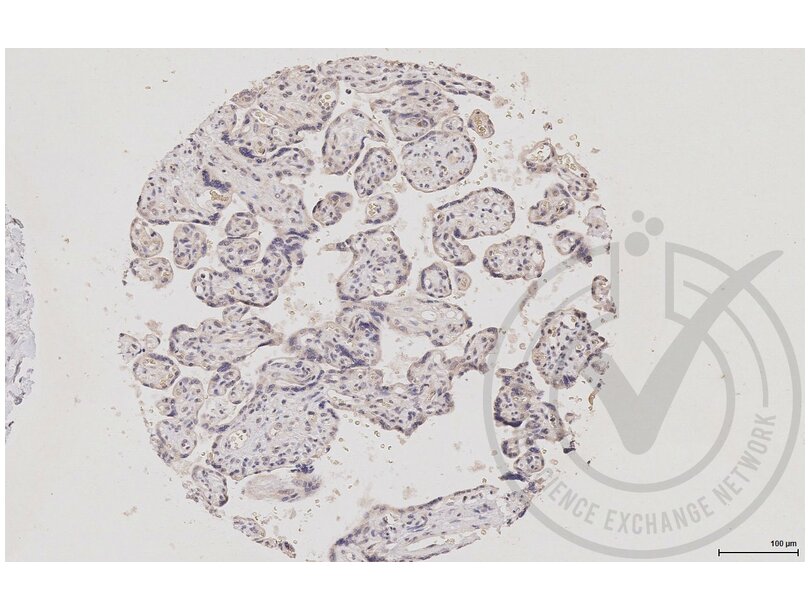
- Human placenta tissue
- Contrôle négative
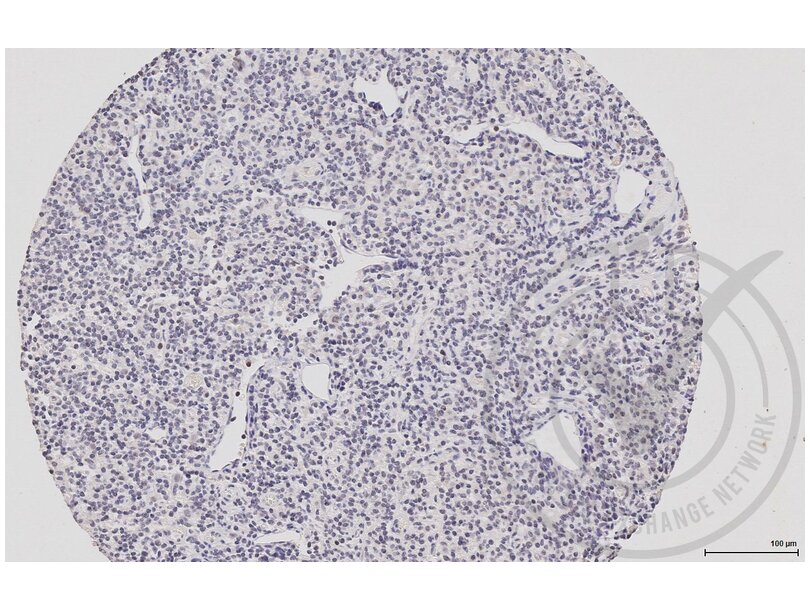
- Human tonsil tissue (no literature evidence of phospho-p38 MAPK in tonsil)
- Conclusion
- Signal is detected in positive control tissue and not in negative control tissue.
- Anticorps primaire
- Antigen: Mitogen-Activated Protein Kinase 14 (MAPK14) (pThr180), (pTyr182)
- Catalog number: ABIN678668
- Lot number: 140106
- Anticorps secondaire
- Antibody: Biotinylated goat anti-rabbit/anti-mouse (Kit)
- Lot number: D07640BA
- Full Protocol
- Immunohistochemistry was performed on a Ventana NEXes automated platform; instrument manufacturer specific reagents are italicized.
- 1. Slides were preheated in convection oven at 60°C for 30 min
- 2. Deparaffinization procedure: - 3 changes of Xylene, 5 min each - 3 changes of 100% Ethanol, 3 min each - 3 changes of 95% Ethanol, 3 min each - Rinsed in distilled water, 3 changes
- 3. Heat retrieval procedure - Slides retrieved in 10.0 mM Citrate, pH6.0 in a 1000W microwave oven (~100°C) for 15 min. - Slides were allowed to cool (in citrate) for 30 min. - Slides were washed x 3 in Distilled water
- 4. NEXes instrument procedure, iView DAB paraffin protocol (*abridged*): - Slide chamber warmed to 37°C
- 5. Slides rinsed with *reaction buffer* x3
- 6. *iView Inhibitor (H2O2)* applied and incubated for 4 min
- 7. Slides rinsed with *reaction buffer*
- 8. Antibody Application - Primary antibody diluted 1:250 in PBS (100 microliter applied/slide) - Ventana Isotype control applied neat - Slides Incubated overnight at room temperature (~12 hours ~25°C)
- 9. Slides rinsed with *reaction buffer* x3
- 10. *iView Biotinylated IgG* applied and incubated for 8 min
- 11. Slides rinsed with *reaction buffer*
- 14. *iView Streptavidin-Horseradish Peroxidase* applied and incubated for 8 min
- 15. Slides rinsed with *reaction buffer*
- 16. *iView DAB/H2O2* applied and incubated for 8 min
- 17. Slides rinsed with *reaction buffer*
- 18. *iView Copper* applied and incubated for 4 min
- 19. Slides rinsed with *reaction buffer*
- 20. Slides washed in Dawn Detergent/tap water
- 21. Counterstain Procedure - Hematoxylin (Leica 560 MX) 30 sec - Slides washed in tap water, 1 min - Decolorized (10% Acetic Acid in 70% ethanol), 1 min - Slides washed in tap water, 1 min - Bluing (Austin Clear Ammonia), 1 min - Slides washed in tap water, 1 min
- 22. Dehydration/coverslipping procedure: - 3 changes of 95% Ethanol, 3 min each - 3 changes of 100% Ethanol, 3 min each - 3 changes of Xylene, 5 min each - Mounted with Permount
- 23. Imaging: Leica SCN 400F Whole Slide Scanner with Digital Image Hub and Leica Slidepath software
- Notes
- Deviations from protocol/procedure supplied by manufacturer:
- Step 1: Heated tissue 60°C for 30 minutes; manufacturer heats for 45 minutes.
- Step 2: No ethanol wash was performed during deparaffinization; manufacturer includes 1 wash of 80% ethanol for 3 minutes.
- Step 3.1: Slides were heated for 15 minutes; manufacturer provides a range of 15-20 minutes.
- Step 3.2: Slides were cooled for 30 minutes; manufacturer cools for 20 minutes.
- Step 4: Italicized reagents and incubation time are fixed instrument parameters.
- Step 5: Secondary species-specific serum block not used; manufacturer blocks with 5% normal goat serum for 2 hours.
- Step 8.1: Antibody diluted in PBS at 1:250; manufacture did not recommend diluent or dilution.
- Step 8.2.1: Primary antibody incubated at room temperature overnight; manufacturer incubates overnight 4°C with agitation.
Validation #029662 (Immunohistochemistry)
 Validation Images
![Figure 1: Human placenta tissue stained with anti-phospho-MAPK14 (brown) and counterstained with hematoxylin.]() Figure 1: Human placenta tissue stained with anti-phospho-MAPK14 (brown) and counterstained with hematoxylin.
Figure 1: Human placenta tissue stained with anti-phospho-MAPK14 (brown) and counterstained with hematoxylin.
![Figure 2: Human tonsil tissue stained with anti-phospho-MAPK14 (brown) and counterstained with hematoxylin.]() Figure 2: Human tonsil tissue stained with anti-phospho-MAPK14 (brown) and counterstained with hematoxylin.
Figure 2: Human tonsil tissue stained with anti-phospho-MAPK14 (brown) and counterstained with hematoxylin.
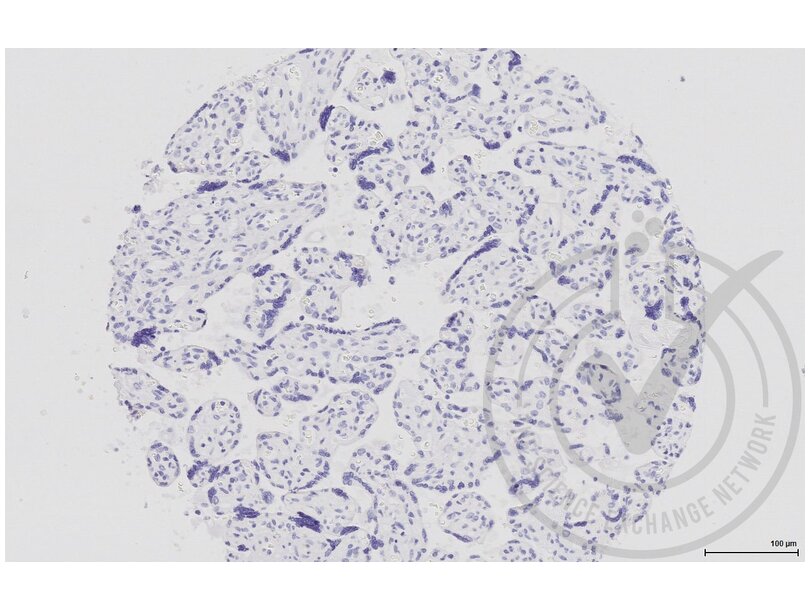
![Figure 3: Human placenta tissue stained with isotype control antibody (brown) and counterstained with hematoxylin.]() Figure 3: Human placenta tissue stained with isotype control antibody (brown) and counterstained with hematoxylin.
Figure 3: Human placenta tissue stained with isotype control antibody (brown) and counterstained with hematoxylin.
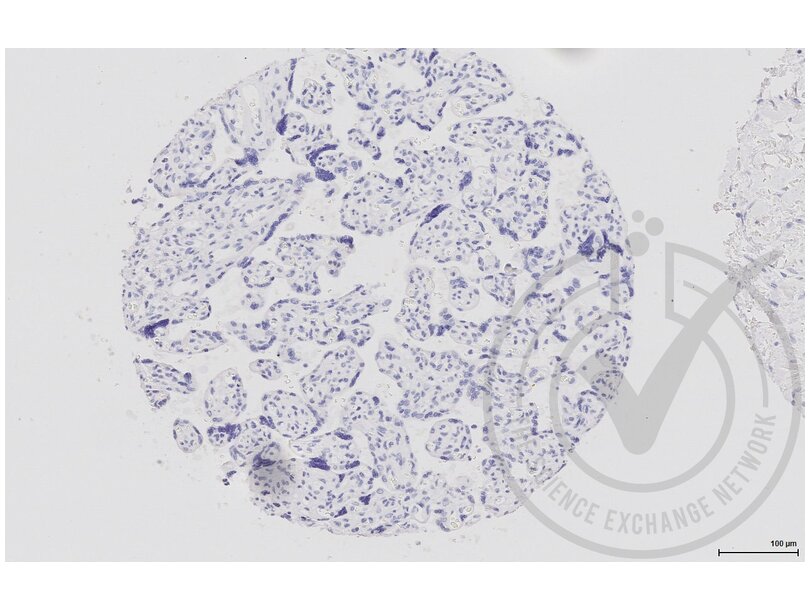
![Figure 4: Human placenta tissue stained with secondary antibody only (brown) and counterstained with hematoxylin.]() Figure 4: Human placenta tissue stained with secondary antibody only (brown) and counterstained with hematoxylin.
Protocole
Figure 4: Human placenta tissue stained with secondary antibody only (brown) and counterstained with hematoxylin.
Protocole -
-
Format
- Liquid
-
Concentration
- 1 μg/μL
-
Buffer
- 0.01M TBS( pH 7.4) with 1 % BSA, 0.02 % Proclin300 and 50 % Glycerol.
-
Agent conservateur
- ProClin
-
Précaution d'utilisation
- This product contains ProClin: a POISONOUS AND HAZARDOUS SUBSTANCE, which should be handled by trained staff only.
-
Stock
- 4 °C,-20 °C
-
Stockage commentaire
- Shipped at 4°C. Store at -20°C for one year. Avoid repeated freeze/thaw cycles.
-
Date de péremption
- 12 months
-
-
-
: "Direct effect of dasatinib on signal transduction pathways associated with a rapid mobilization of cytotoxic lymphocytes." dans: Cancer medicine, Vol. 5, Issue 11, pp. 3223-3234, (2016) (PubMed).
: "Expression of miR-34c in response to overexpression of Boule and Stra8 in dairy goat male germ line stem cells (mGSCs)." dans: Cell biochemistry and function, Vol. 31, Issue 4, pp. 281-8, (2013) (PubMed).
: "Upregulation of progranulin by Helicobacter pylori in human gastric epithelial cells via p38MAPK and MEK1/2 signaling pathway: role in epithelial cell proliferation and migration." dans: FEMS immunology and medical microbiology, Vol. 63, Issue 1, pp. 82-92, (2012) (PubMed).
-
: "Direct effect of dasatinib on signal transduction pathways associated with a rapid mobilization of cytotoxic lymphocytes." dans: Cancer medicine, Vol. 5, Issue 11, pp. 3223-3234, (2016) (PubMed).
-
- MAPK14 (Mitogen-Activated Protein Kinase 14 (MAPK14))
-
Autre désignation
- p38 MAPK +
-
Sujet
-
Synonyms: RK, p38, CSBP, EXIP, Mxi2, CSBP1, CSBP2, CSPB1, PRKM14, PRKM15, SAPK2A, p38ALPHA, Mitogen-activated protein kinase 14, MAP kinase 14, MAPK 14, Cytokine suppressive anti-inflammatory drug-binding protein, CSAID-binding protein, MAP kinase MXI2, MAX-interacting protein 2, Mitogen-activated protein kinase p38 alpha, MAP kinase p38 alpha, Stress-activated protein kinase 2a, MAPK14
Background: The protein encoded by this gene is a member of the MAP kinase family. MAP kinases act as an integration point for multiple biochemical signals, and are involved in a wide variety of cellular processes such as proliferation, differentiation, transcription regulation and development. This kinase is activated by various environmental stresses and proinflammatory cytokines. The activation requires its phosphorylation by MAP kinase kinases (MKKs), or its autophosphorylation triggered by the interaction of MAP3K7IP1/TAB1 protein with this kinase. The substrates of this kinase include transcription regulator ATF2, MEF2C, and MAX, cell cycle regulator CDC25B, and tumor suppressor p53, which suggest the roles of this kinase in stress related transcription and cell cycle regulation, as well as in genotoxic stress response. Four alternatively spliced transcript variants of this gene encoding distinct isoforms have been reported. [provided by RefSeq, Jul 2008]
-
ID gène
- 1432
-
UniProt
- Q16539
-
Pathways
- Signalisation MAPK, Neurotrophin Signaling Pathway, Activation of Innate immune Response, Cellular Response to Molecule of Bacterial Origin, Regulation of Muscle Cell Differentiation, Regulation of Cell Size, Hepatitis C, Toll-Like Receptors Cascades, Autophagy, Thromboxane A2 Receptor Signaling, BCR Signaling, S100 Proteins
Antigène
-